How do I know whether to thin my seedlings?
When it comes to growing plants in containers, there’s no biological imperative for thinning; no plant absolutely requires it. But when growing plants for horticultural purposes, thinning can result in stockier, stronger seedlings. However, not all plants benefit from thinning, and many are happy to share a pot with one or two (or more) of their friends. I have a simple dichotomous key for determining whether to thin:
1a. Plant produces basal leaves primarily (see figure 1): Do not thin
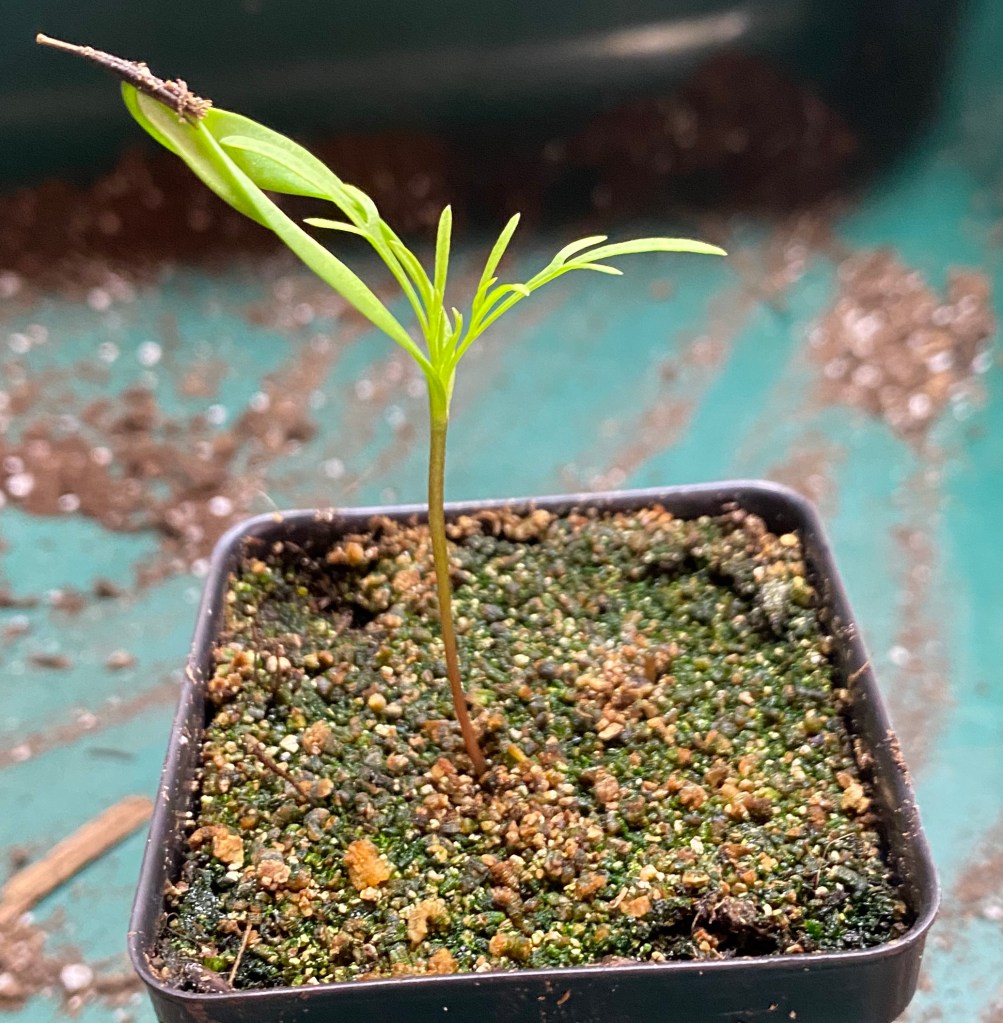
1b. Plant produces leaves from an erect stem (see figure 2): Go to 2
2a. Plant is a vine: Do not thin
2b. Plant is not a vine: Thin to one plant per pot
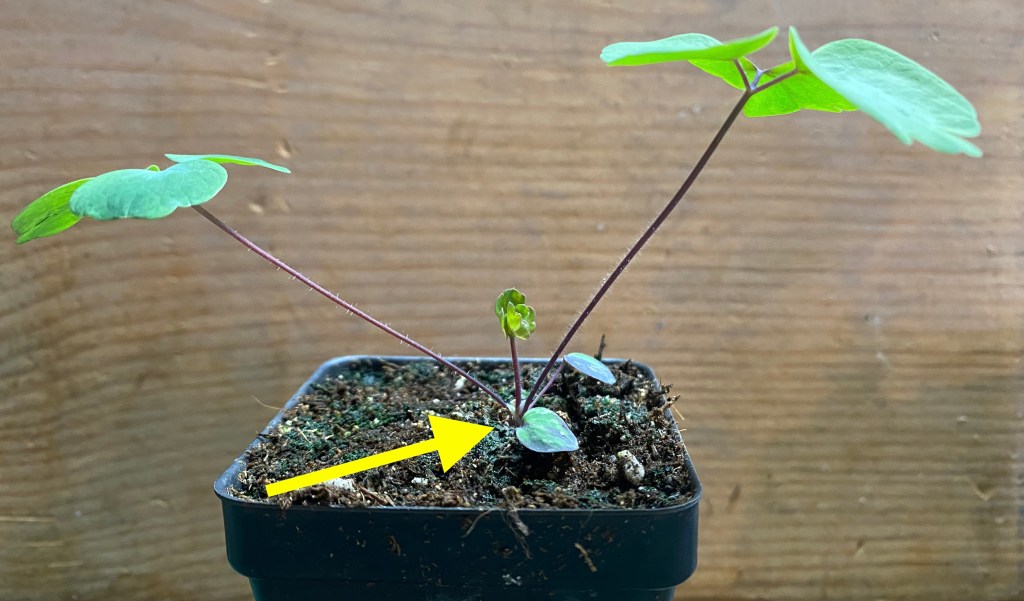
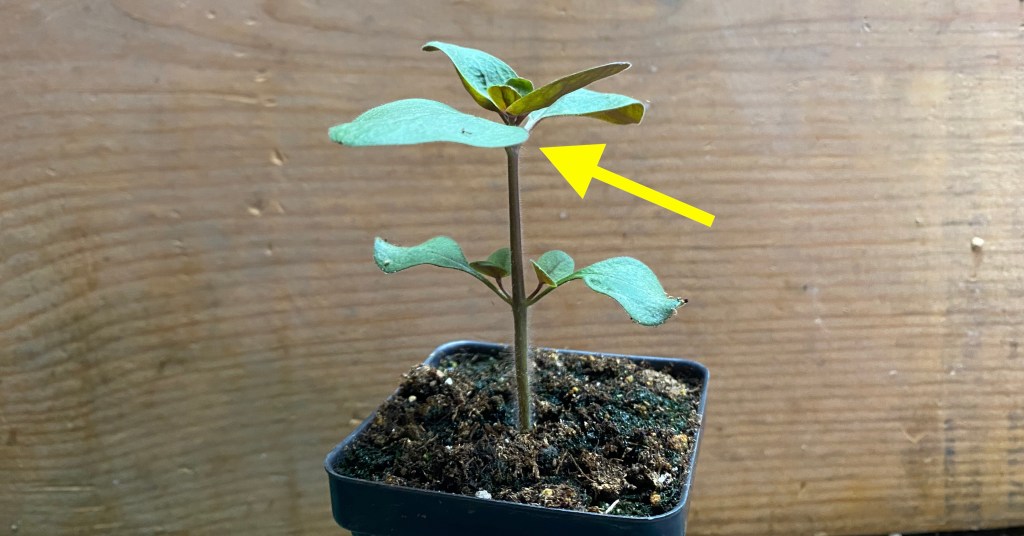
If dichotomous keys aren’t your thing, what I’ve trying to say is that if the plant is not a vine and it doesn’t produce basal leaves, it should be thinned. Non-vining plants that grow from a stem typically will compete with each other if they aren’t thinned. Sometimes the stronger plant will shade out and kill the weaker plant, effectively doing the thinning itself. But if the plants have equal vigor, they will continuously compete, which can result in excessively lanky and weak growth.
Plants with basal growth tend to do fine in small clumps, and won’t suffer from it. In some cases, they may look more aesthetically pleasing, since they’ll produce a more filled-out look. Vining plants need support no matter what, so there is no reason to try to promote stocky growth through thinning.
How do I thin?
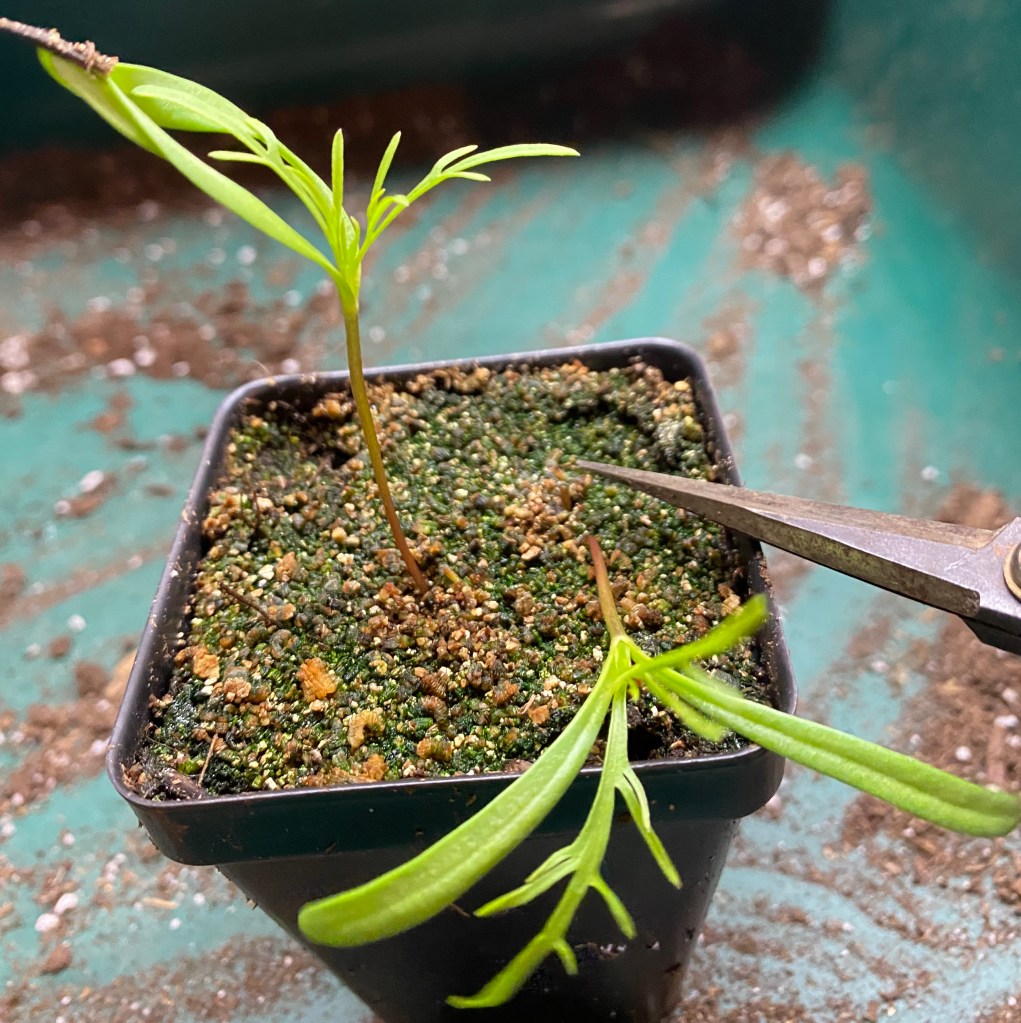
Thinning itself is very easy. You can pluck out unwanted plants, or snip them at their base. I favor the snipping method, as I worry that plucking can damage the roots of the remaining plant. Always remove the weaker plant. In general, I remove the plant with the thinner stem, even if the thinner-stemmed plant is the taller one. The goal is to produce strong, stocky seedlings, so a shorter seedling with a thicker stem is preferable to a taller plant with a thinner stem.
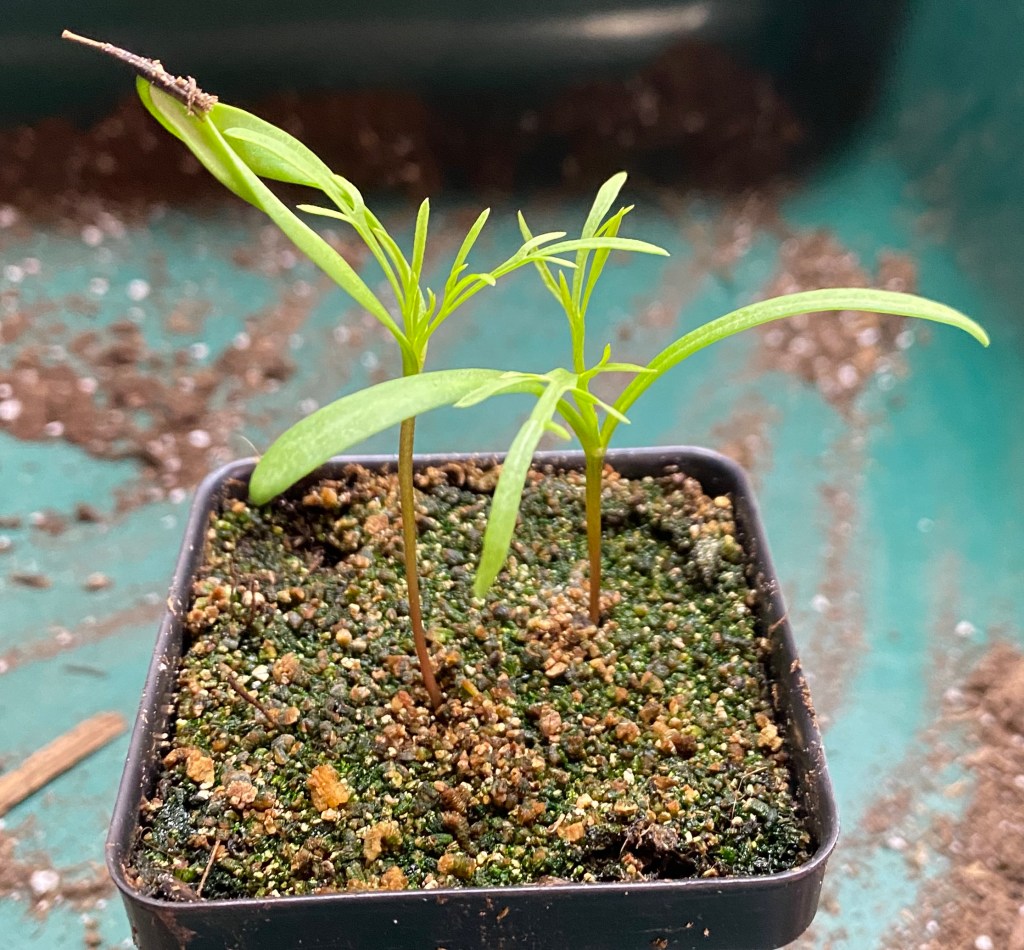
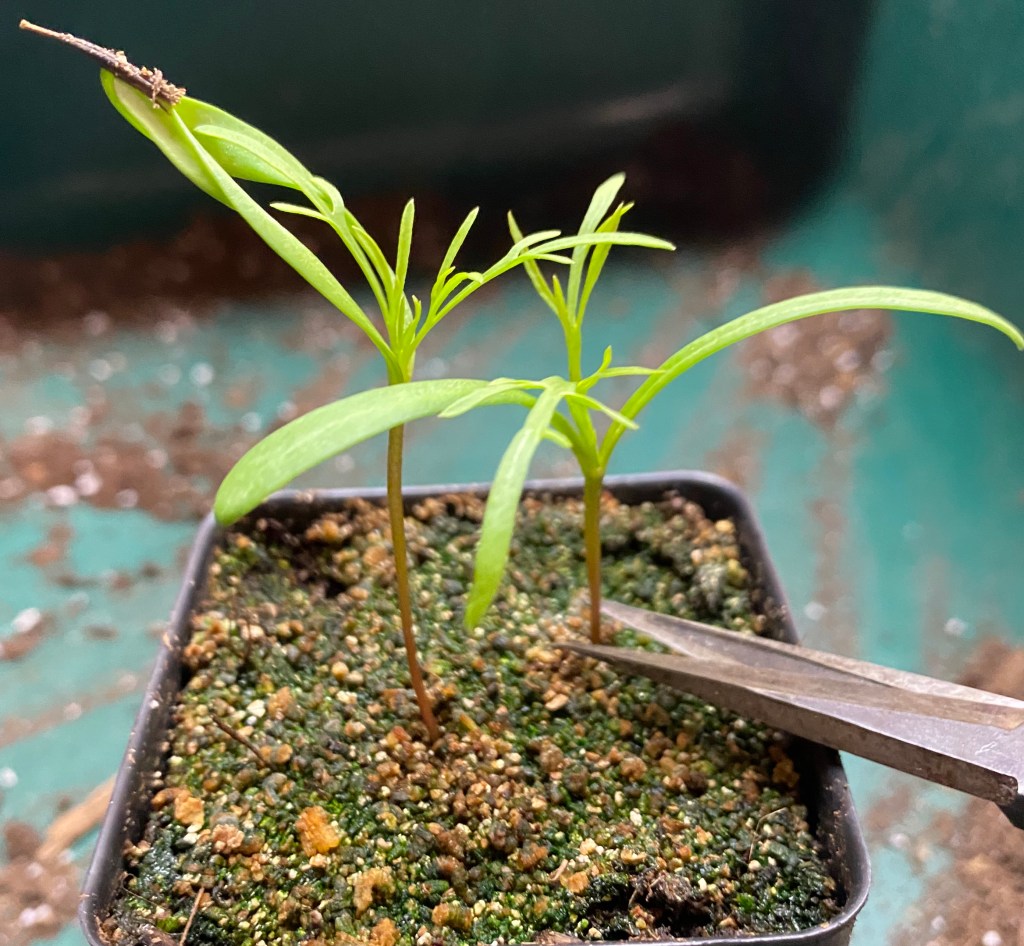
 Practical Seed Ecology