
Pulsatilla nuttalliana
Quick facts
Common Names
Family
Seed Storage Potential
Dormancy Type
pretreatment protocol
Sowing temperature regime
Light requirement for germination
Days to first germination
Weeks to fill Nursery Pot
How to Grow Pulsatilla nuttalliana (Anemone patens, American Pasqueflower) from Seed
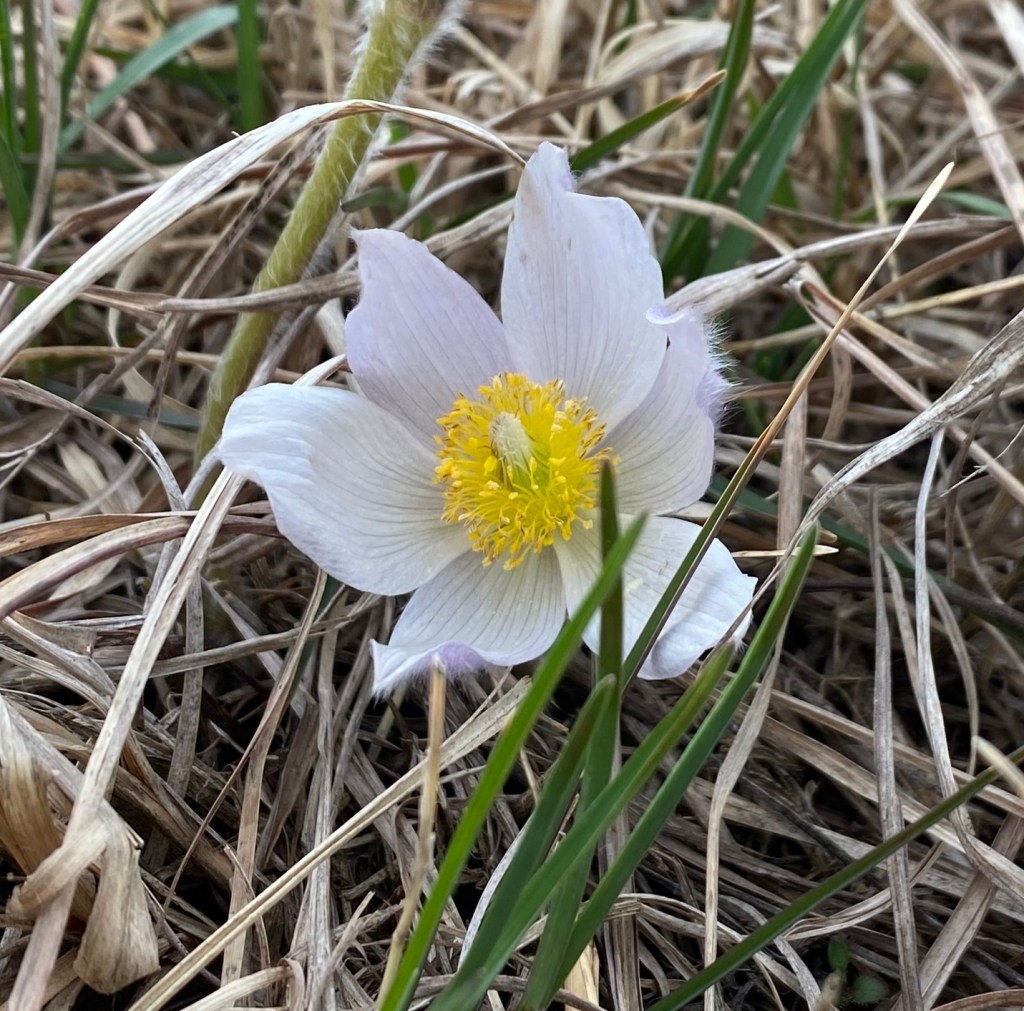
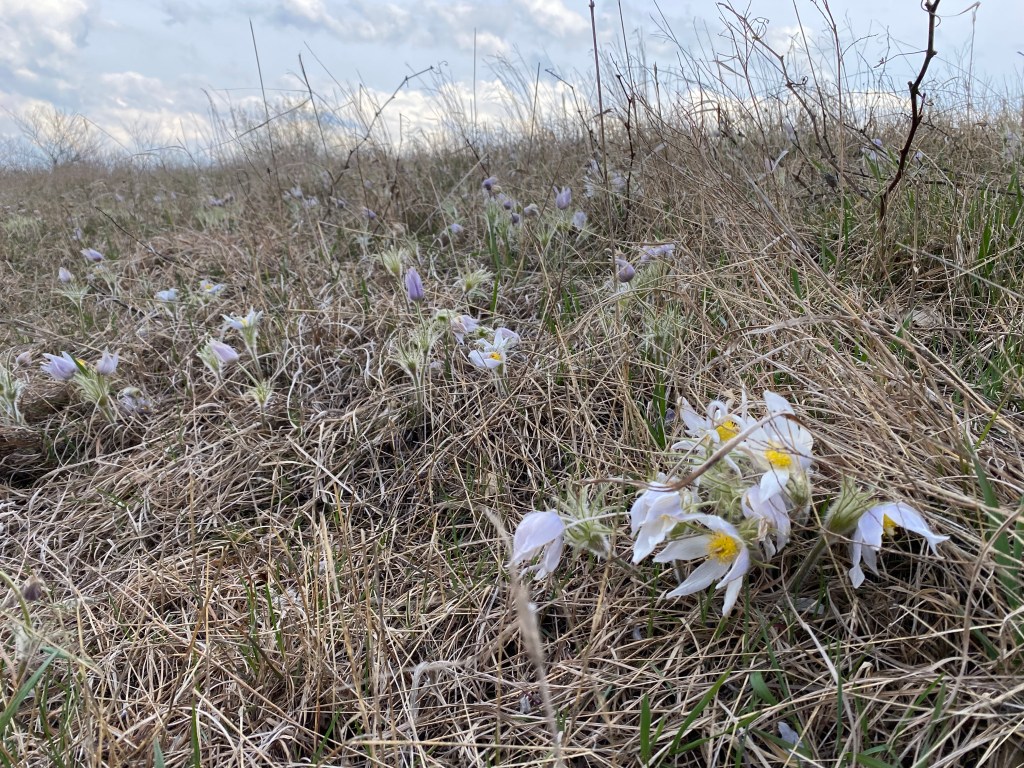
In my area, Pulsatilla nuttalliana (which some seed sellers call Anemone patens var. wolfgangiana, more on that below) is the first plant to flower in the upland prairie, usually in early- or mid-April. So when sleepy queen bumblebees wake up in the spring, this flower might provide their first pollen feast. And after a long Midwestern winter, it certainly puts a pep in my step to feast my eyes upon its delicate blooms. It’s not common in home gardens, and it’s very rare in degraded ecosystems. But if you visit a dry or dry–mesic prairie remnant in Wisconsin, you’re likely to be treated with a display of thousands of blooms.
I’ve done my best to cram everything I know about P. nuttalliana into this post. First I provide instructions on its propagation and care, then I have info on its various names (including Prairie Moon’s appellation “Anemone patens var. wolfgangiana“), and I wrap up with summaries of two experiments I’ve run on germinating P. nuttalliana seeds.
Pulsatilla nuttalliana propagation and care guide
Seed collection and storage
In southern Wisconsin, P. nuttalliana seeds should be ready to collect approximately late May through mid-June. I have a hunch that P. nuttalliana seeds do not remain viable after dry storage (i.e., they are desiccation-sensitive/recalcitrant), but I have not yet tested this for myself, and academic studies of this are lacking. So to be on the safe side, I recommend sowing seed shortly after collecting it, or buying seed that has been stored in refrigeration.
Germination
P. nuttalliana seeds do not require pretreatment—such as cold–moist stratification—to germinate. In my experiments, described later in this article, cold–moist stratification decreased germination.
I have successfully germinated P. nuttalliana seeds using both 30/15°C and 20/10°C temperature regimes, but I have not yet compared the two regimes rigorously. For seed stored approximately four months under dry refrigeration, I have seen 29% germination when sown at 30/15°C. Zastre reports germination rates of up to 42% using a 17/11°C regime.3 So either temperature regime should work.
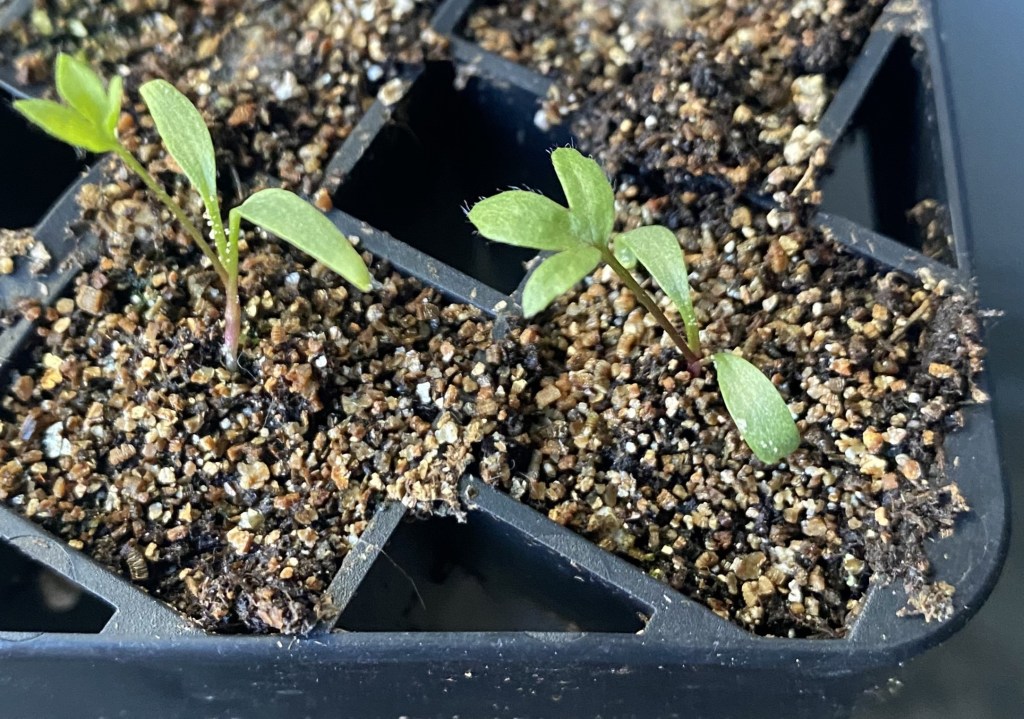
Seeds will germinate after about two weeks.
Planting considerations
P. nuttalliana will fill a standard 2.5 × 2.5 × 3.5 in. nursery pot in about twelve weeks, when grown at a 20/10°C temperature regime. If planted out in early spring, plants often flower the following spring.
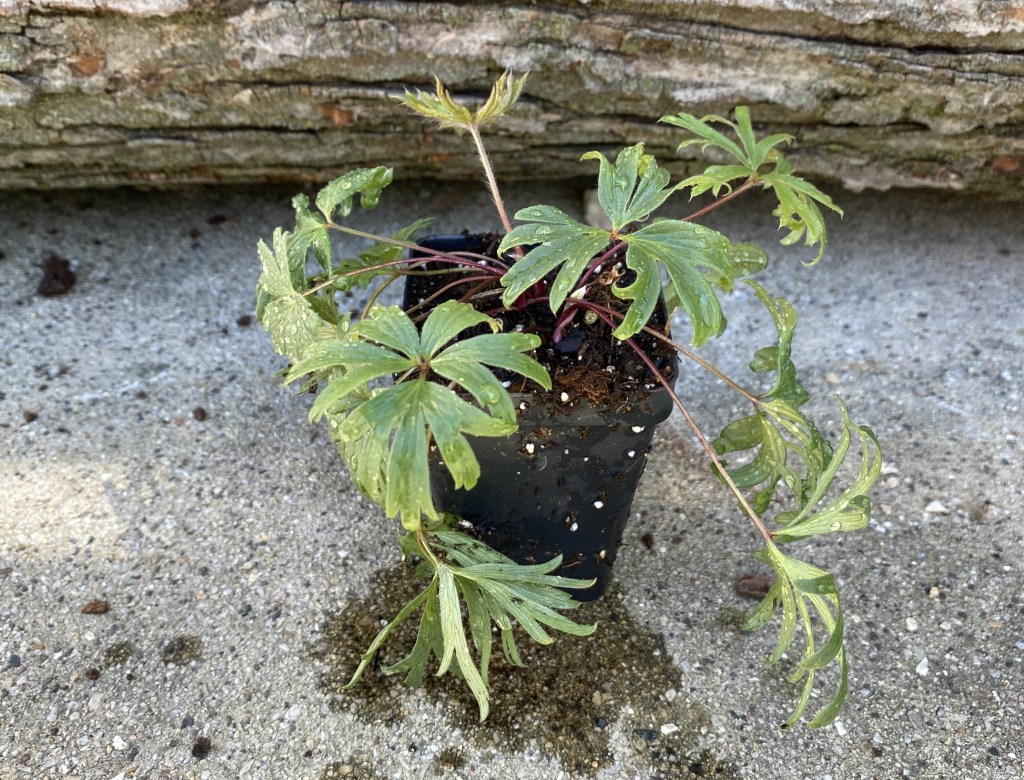
Because they are slow growing plants, I often grow mine in larger nursery pots (such as quart-sized ones) so that I can give them more time in the greenhouse.
P. nuttalliana are not particularly difficult to grow in the field, but they do have a point of view as to where they ought to be planted. If they don’t like the spot you pick out for them, they may refuse to come back for a second year. So if it’s your first time planting P. nuttalliana, try a variety of locations, and see where they prefer. Even though P. nuttalliana usually occurs in dry prairies, I’ve had at least one survive in a relatively wet (albeit quick-draining and loamy) area, so don’t rule out mesic planting sites.
P. nuttalliana do not tolerate competition from other plants. I have seen P. nuttalliana outcompeted by relatively small plants, such as Echinacea pallida. Plant them alongside other short and non-vigorous species. Once they get shaded out by neighbors, they die. Think Geum triflorum, Pedicularis canadensis, Viola pedata, Carex meadii, et cetera.
A plant so nice they named it thirty times
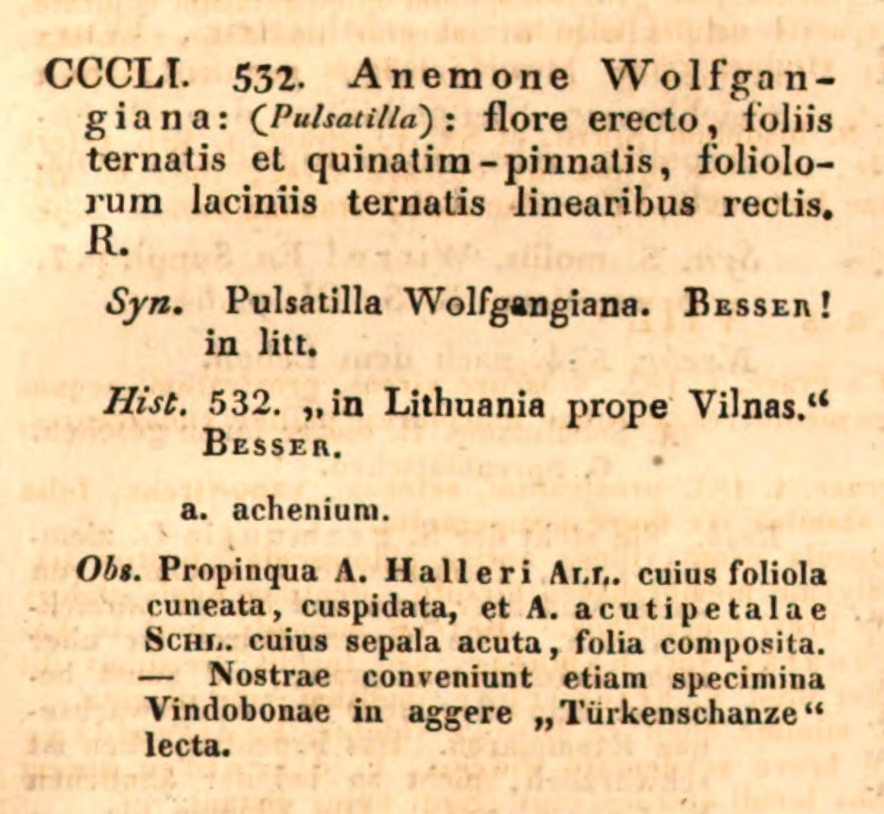
There are many synonyms for Pulsatilla nuttalliana, which can make it difficult to find information on it. Our trusted sources of botanical information can’t seem to agree on its name: Prairie Moon calls it Anemone patens var. wolfgangiana, Minnesota Wildflowers calls it Anemone patens, and the Lady Bird Johnson Wildflower Center calls it Pulsatilla patens ssp. multifida (though they also offer a helpful list of synonyms). Prairie Moon’s use of the epithet “wolfgangiana” is, according to Mosyakin (2016), inappropriate for the North American taxa of Pulsatilla, since the name Anemone wolfgangiana was given to a specimen collected in Lithuania (see figure 4). At any rate, Pulsatilla nuttalliana is now generally accepted as the botanical name (and aligns with the taxonomy of Wikipedia, Kew, and iNaturalist), so I’ll use that going forward.
Results from my 2025 cold–moist stratification experiment
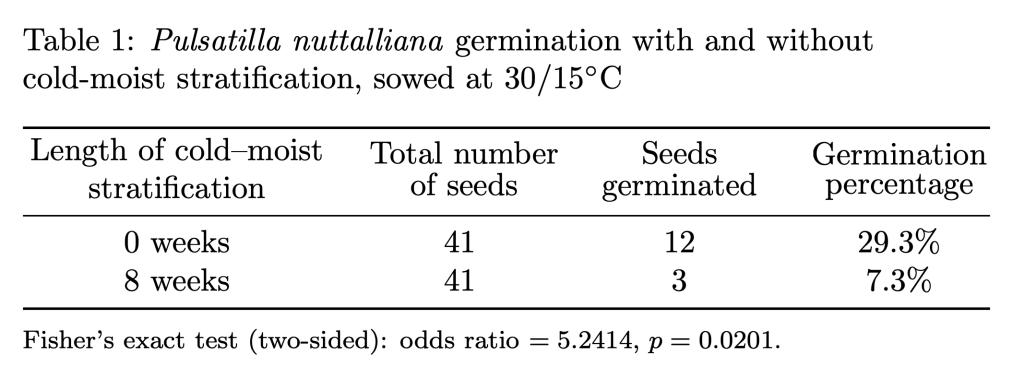
Last year I tested whether eight weeks of cold–moist stratification would increase germination of P. nuttalliana, in light of Greene and Curtis’s 1950 article claiming that two months of stratification yielded 98% germination rates.4 My experiment yielded the opposite result: the group of seeds given eight weeks of cold–moist stratification has statistically significantly less germination than the group sown without stratification (see table 1). So my experiment suggests that we shouldn’t waste time trying to stratify these seeds (and we shouldn’t plant them outside in the fall as Prairie Moon suggests).
I can’t explain why Greene and Curtis saw such high germination, but their article is more than 75 years old, so who knows.
Results from my 2024 gibberellic acid test
Gibberellic acid (GA3) is a hormone that plants produce naturally, and exogenous GA3 can be applied to seeds and plants to achieve various goals. In the malting industry, GA3 is sprayed on barley kernels to promote uniform and rapid germination. In floristry, it can extend the vase life of flowers. In agriculture, it is used to produce gigantic grapes and seedless citrus. I was most interested in its ability to promote germination in dormant seeds, and back in October 2024 I was soaking a lot of seeds in GA3 to see what would happen.
I decided to test the effects of 250ppm and 500ppm GA3 solutions on P. nuttalliana seeds, but regrettably I elected to not test a control group. I will rectify my mistake in the coming weeks, and post updated results. So I have some preliminary results, but without a control group, I can’t yet say whether the GA3 promoted or inhibited germination.
My procedure was as follows:
- I soaked my seeds (from Prairie Moon) for 24 hours in either a 250ppm or 500ppm GA3 solution.
- Next, I mixed the seeds with barely-damp play sand and placed them in the fridge (about 5°C) for nine weeks. (A few seeds germinated in the fridge – typically this indicates that the seeds spent more time than necessary in cold stratification.)
- Finally, I placed the seeds on my substrate (PRO-MIX BX), lightly covered them with vermiculite, put them in my 20/10°C germination chamber, and waited.
Three weeks after sowing, I assessed results: the 250ppm group had 14% germination, and the 500ppm group had 0% germination. So clearly a 24-hour soak at 500ppm is too strong for P. nuttalliana. Without a control group, I can’t say with certainty whether the 250ppm treatment increased or decreased germination relative to a nine-week stratification protocol without GA3. But considering that I achieved 29% germination in 2025 without GA3, I doubt it improved germination.■
Have a question? If you have questions about Midwestern native plant propagation that you want answered in a future post, I’d love to hear from you! Shoot me an email at plantpropagationproject@gmail.com
Want to support this work? Buy me a cup of coffee (or a bag of potting medium) with the donation button at the bottom of this page. Or better yet, send me your germination success stories.
Notes
- Prairie Moon sells these as refrigerated seed, suggesting that they do remain viable when stored dry at room temperature. However, Zastre reports storing their seeds dry at 9°C for approximately six to twelve months before sowing or pretreating (exact timing not given). Judith Anne Zastre, “Controlled Environment Propagation and Culture of Castilleja Coccinea (L.) Spreng., Anemone Patens Var. Wolfgangiana (Bess.) Koch, and Cypripedium Calceolus Var Parviflorum (Salisb.) Fern.” (master’s thesis, University of Manitoba, 1985), https://bac-lac.on.worldcat.org/oclc/16019527. Writing on a Slovakian species of Pulsatilla, Lhotská and Moravcová achenes collected at “full ripeness” retained viability much better than those collected at “wax-ripeness” (62.6% vs 32.6%, respectively, after 39 weeks of room temperature storage). Marie Lhotská and Lenka Moravcová, “The Ecology of Germination and Reproduction of Less Frequent and Vanishing Species of the Czechoslovak Flora. II. Pulsatilla Slavica Reuss,” Folia Geobotanica & Phytotaxonomica 24, no. 2 (1989): 211–14.” ↩︎
- Baskin and Baskin, based on the research by Greene and Curtis (citation in note 5), list P. nuttalliana (using the synonym “Anemone patens”) as having morphophysiological dormancy. I, however, am deeply skeptical of Greene and Curtis’s conclusions. According to Baskin and Baskin’s own dichotomous key for seed dormancy, a seed with a non-differentiated embryo that germinates in less than four weeks should be considered morphologically dormant. Thus I think it’s safe to say that P. nutalliana has morphological dormancy. Carol C. Baskin and Jerry M. Baskin, Seeds: Ecology, Biogeography, and, Evolution of Dormancy and Germination, Second Edition (San Diego, CA: Academic Press, 2014). ↩︎
- Zastre, “Controlled Environment Propagation.” In my own experiments, I have observed germination with and without light (but I have not run a full experiment). ↩︎
- Zastre, “Controlled Environment Propagation.” ↩︎
- H. C. Greene and J. T. Curtis, “Germination Studies of Wisconsin Prairie Plants,” The American Midland Naturalist 43, no. 1 (1950): 186–94, https://doi.org/10.2307/2421891. ↩︎
Buy me a cup of coffee, a whole bag of coffee, or a whole bag of PRO-MIX BX (my preferred potting medium).
Make a monthly donation
Make a yearly donation
Choose an amount
Or enter a custom amount
Thank you for supporting this project!
Your contribution is appreciated.
Your contribution is appreciated.
DonateDonate monthlyDonate yearly Practical Seed Ecology