
Lathyrus odoratus

Quick facts
Common Name
Family
Edibility
Seed Pretreatment
Planting Depth
Light requirement for germination
Days to first germination
Weeks to fill Nursery Pot
Plant Spacing
Support Considerations
Harvest Window
Vase Life
Despite being native to Sicily and Sardinia, sweet peas have come to be a quintessential English cottage garden flower. The “sweet” in their name refers to their scent, not their flavor. Indeed, they are toxic, so do not eat them. While some cultivars have little or no scent, I recommend growing the odorous ones—the perfume is half the fun.
I have tried many cultivars of sweet pea, and here in southern Wisconsin, members of the Spencer series grow best. In particular, the ‘Spencer Ripple Formula Mix’ from Johnny’s performs extremely consistently, year after year. Although you can cut just the stem, I prefer to cut long chunks of the plant that include tendrils and leaves, which lends bouquets a relaxed and romantic look.
Propagation Considerations
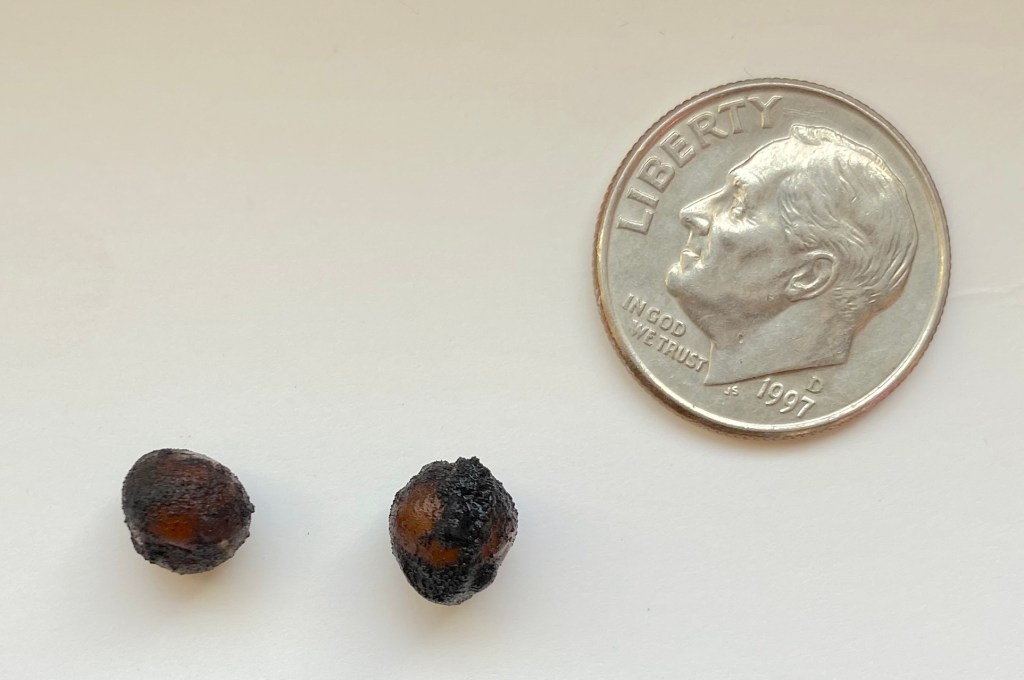
In my experience, soaking the seeds for 24 hours in room temperature water vastly improves germination. After soaking, the seeds will be noticeably larger from the imbibed water (see image below).

Sweet peas, like other legumes, are able to form symbiotic relationships with Rhizobia soil bacteria, thus fixing nitrogen from the air.1 This symbiotic relationship has not been studied extensively in sweet peas, and it’s not known whether it improves flower production. However, in leguminous commodity crops like soybeans, symbiosis with Rhizobia has been shown to improve plant productivity. To keep my bases covered, I like to inoculate sweet peas, but this step is 100% optional.
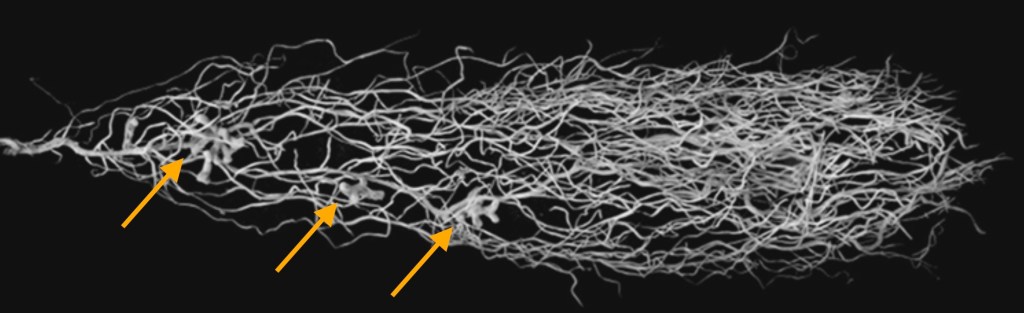
Visjon Biologics labels their Rhizobium leguminosarum biovar viceae inoculant as being suitable for Lathyrus, so that’s what I use. This is sold as “EXCEED Pea, Vetch, and Lentil” by Johnny’s, or you can buy the “EXCEED Garden Combination” inoculant, which is a mélange of several different types, including the above. To apply the inoculant, I just strain my soaked seeds, add the inoculant to the wet seeds, and swirl. They should be evenly coated (see image below). Now plant the coated seeds 1/2″ deep, and you’re ready to go!
Maintenance Considerations
Even though sweet peas are toxic, bunnies still enjoy eating them. So protect from bunnies! Sweet peas are climbing vines, so you’ll need some sort of trellis. The trellis need not be elaborate: in production floriculture, netting is typically used, such as Trellis Plus. I try to avoid plastic in my garden (there are enough microplastics in the soil already), so I prefer spending extra money on natural fiber products like CocoNet.
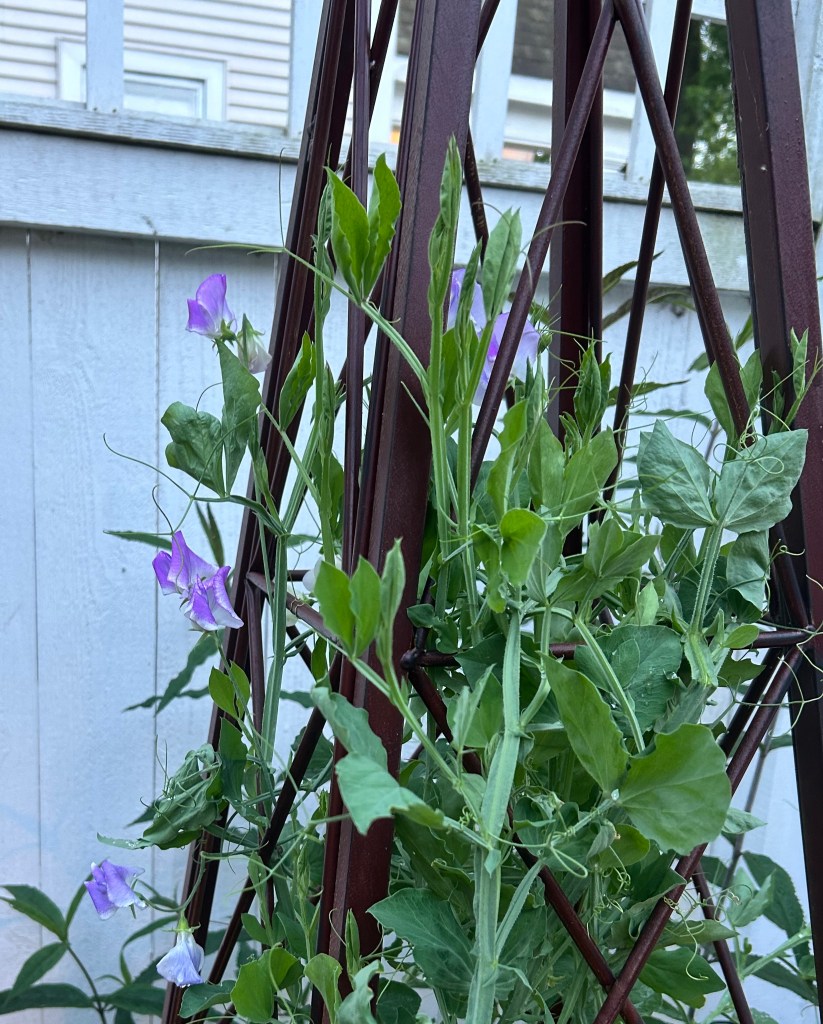
Or, if you don’t want to buy netting of any sort, you can rig something up with twine or sticks. If you want to splurge, you could get fancy and give them a garden obelisk (see image below).
Harvest Considerations
Harvesting sweet peas is easy—just snip them when the flowers are open. The more you harvest, the more they will flower. You can either snip at the base of the stem, or remove larger chunks of the vine (including tendrils and leaves). They should keep in the vase for about 5-7 days.■
Have a question? If you have questions about Midwestern native plant propagation that you want answered in a future post, I’d love to hear from you! Shoot me an email at plantpropagationproject@gmail.com
Notes
- Sidorova, K. K., G. D. Levko, and V. K. Shumny. “Investigation of nodulation and nitrogen fixation in annual species and varieties of vetchling, genus Lathyrus.” Russian Journal of Genetics: Applied Research 3 (2013): 197-202. ↩︎
 Practical Seed Ecology